

Walking sticks, seat sticks & umbrellas supplied to the retail trade by leading British wholesaler, Classic Canes®Slide Slide Slide Slide Slide Slide Discover our wide range of walking sticks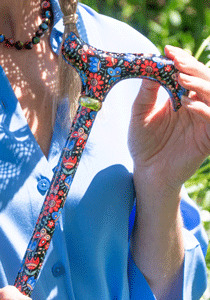 new collection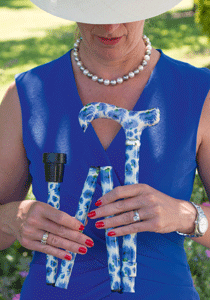 spring florals get walking! Gifts for men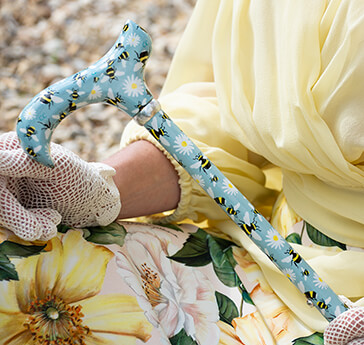 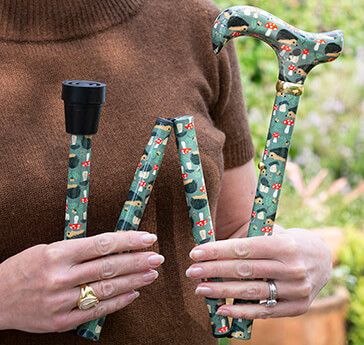 CLASSIC CANES®: THE WALKING STICKS SPECIALIST SINCE 1982Classic Canes is a UK family business that specialises in the wholesale supply of walking sticks, walking canes, folding sticks, seat sticks and umbrellas to the retail trade. Established in 1982, Classic Canes is based in Somerset, England, from which we despatch walking sticks to retailers in approxiately 30 countries around the world. Our range of products includes everyday wooden walking sticks, ladies' fashionable, patterned canes, folding canes, orthopaedic walking sticks, collectors' canes, formal canes, traditional leather seat sticks, contemporary seat sticks and a range of classic umbrellas. Many of our walking sticks are designed in-house and offer a particularly British sense of style.
Classic Canes is well known for the design and quality standards of its canes. Retailers who choose Classic Canes as their walking stick wholesaler and supplier can be assured of the finest walking canes and a very knowledgeable level of customer service.
Please read on in our trade area section to learn more about Classic Canes and its very special products.
Classic Canes is owned by Ben and Diana Porter and their daughter, Charlotte Gillan. The family started the business when they realised the woodland surrounding their house was naturally growing suitable wood for making rustic walking sticks. Originally a small range of wooden walking canes was offered to local retailers, but the business soon expanded so that today Classic Canes supplies a range of around 500 models of height adjustable walking sticks, fold-up canes, seat sticks and umbrellas to shops in the UK and many countries around the world.
STYLISH WALKING CANES FOR EVERYONEClassic Canes was one of the first walking stick suppliers to design models for women and these have become a particular strength of the company. Beforehand, women had to make do with a man’s crook or derby walking stick cut down in height, which was often neither elegant nor comfortable. Ladies' walking sticks have different proportions to gentlemen's sticks and are available in a wide range of colours and patterns to complement any outfit. Classic Canes’ sense of elegance and style means that fashionable women’s canes are available for ladies who see no need to sacrifice their elegant appearance just because they need a cane. Cane styles can be discreet or flamboyant and include floral and leopard print as well as animals, insects, birds and modern abstract patterns. Classic Canes' exclusive cane patterns are also available in popular folding cane styles.
At Classic Canes there is a walking stick for everyone. |
Stay in Touch:
Classic Canes is on Facebook and Instagram. Please follow us for the latest new product information and other walking stick news.


Classic Canes Limited
Warren House
Hinton St George
Crewkerne
Somerset TA17 8TQ
England
Tel: +44 (0)1460 75686
Privacy Policy
Site design and build by Mercer Design
Classic Canes is on Facebook and Instagram. Please follow us for the latest new product information and other walking stick news.
Classic Canes Limited
Warren House
Hinton St George
Crewkerne
Somerset TA17 8TQ
England
Tel: +44 (0)1460 75686
Privacy Policy
Site design and build by Mercer Design